How to Accurately Identify Common Tapered Pipe Threads: NPT, BSPT, and JIS

How to Accurately Identify Common Tapered Pipe Threads NPT, BSPT, and JIS

In hydraulic systems, tapered threads play a crucial role due to their ability to self-seal directly along the thread flanks. However, because they all share a similar tapered profile that gradually narrows toward the tip, distinguishing between BSPT, NPT, and JIS Tapered threads with the naked eye is incredibly difficult. This article will guide you in selecting the correct thread standard to ensure the safe and reliable operation of your system.

1. Why is it Crucial to Differentiate Tapered Threads?

Tapered threads are engineered so that their crests (peaks) and roots (valleys) wedge tightly together when torqued down, creating a pressure-tight mechanical seal.

System Leakage: This occurs because the thread pitch (threads per inch) or the thread angle (e.g., 55° vs. 60°) do not align perfectly, leaving micro-gaps for fluid to escape.

Thread Galling and Stripping: Mismatched threads will bind and crush against one another when forced. This not only ruins the connection but can permanently damage expensive stainless steel fittings or critical machinery components.

2. Detailed Characteristics of the 3 Main Tapered Thread Systems

2.1. BSPT (British Standard Pipe Tapered) - British Standard

Also commonly referred to as PT threads (frequently used in Japan and South Korea) or R threads.

  • Characteristics: The tapered profile looks visually similar to NPT, but the technical specifications are completely different.
  • Thread Angle: The angle between the thread flanks is 55° (sharper than NPT).
  • Applications: Highly popular in the Vietnamese market, particularly within European and Asian industrial piping systems.
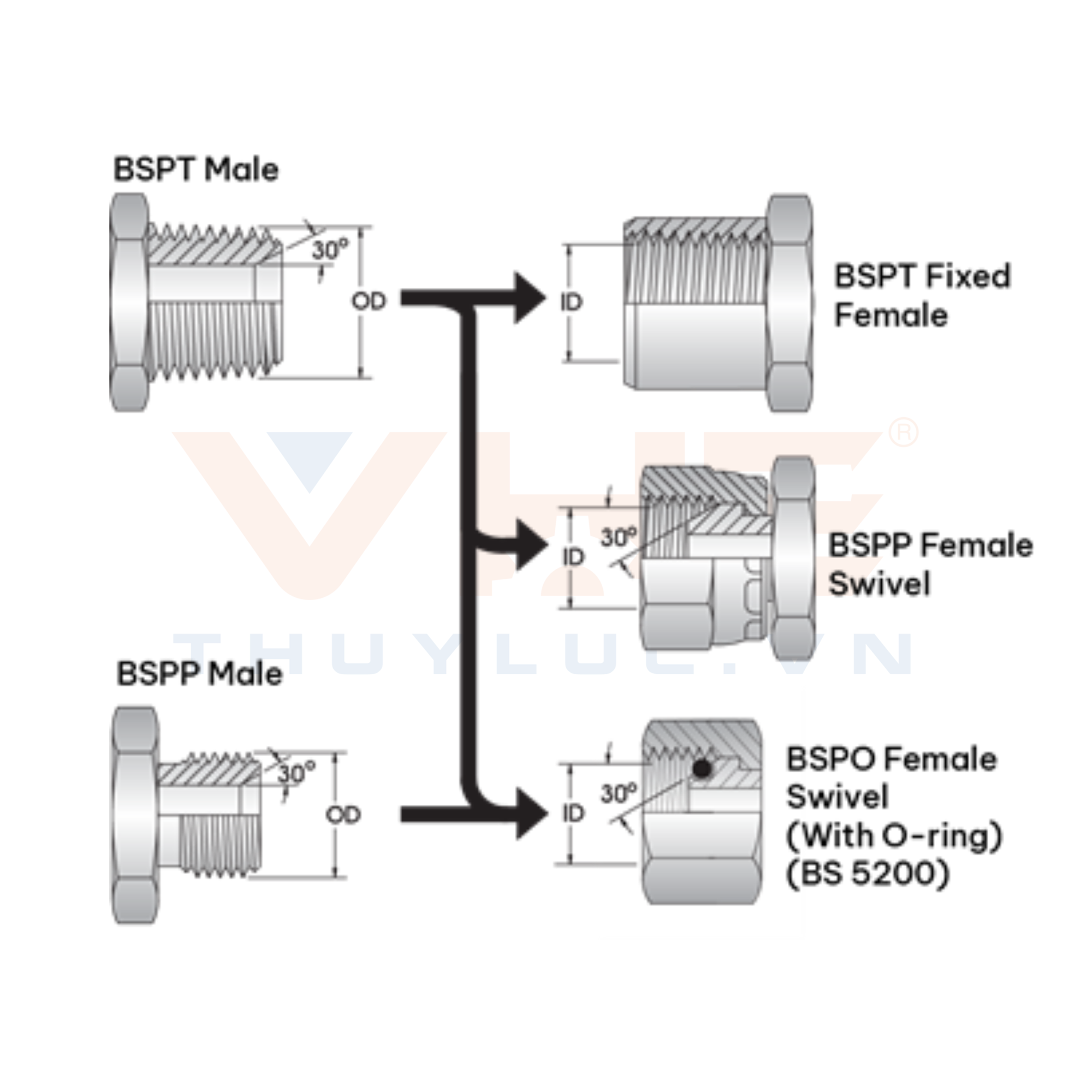
BSPT (British Standard Pipe Tapered) - British Standard

2.2. NPT (National Pipe Tapered) - American Standard

NPT is the standard American tapered thread, exceptionally common in industrial piping and oil & gas systems.

  • Characteristics: It features a tapered design. When torqued down, the thread flanks compress tightly against each other to create a mechanical seal.
  • Thread Angle: The angle between the thread flanks is 60°.
  • Sealing Method: NPT seals via thread interference (crest and root deformation). It typically requires the use of thread sealant, such as Teflon tape (PTFE) or pipe dope, to ensure a leak-free connection.
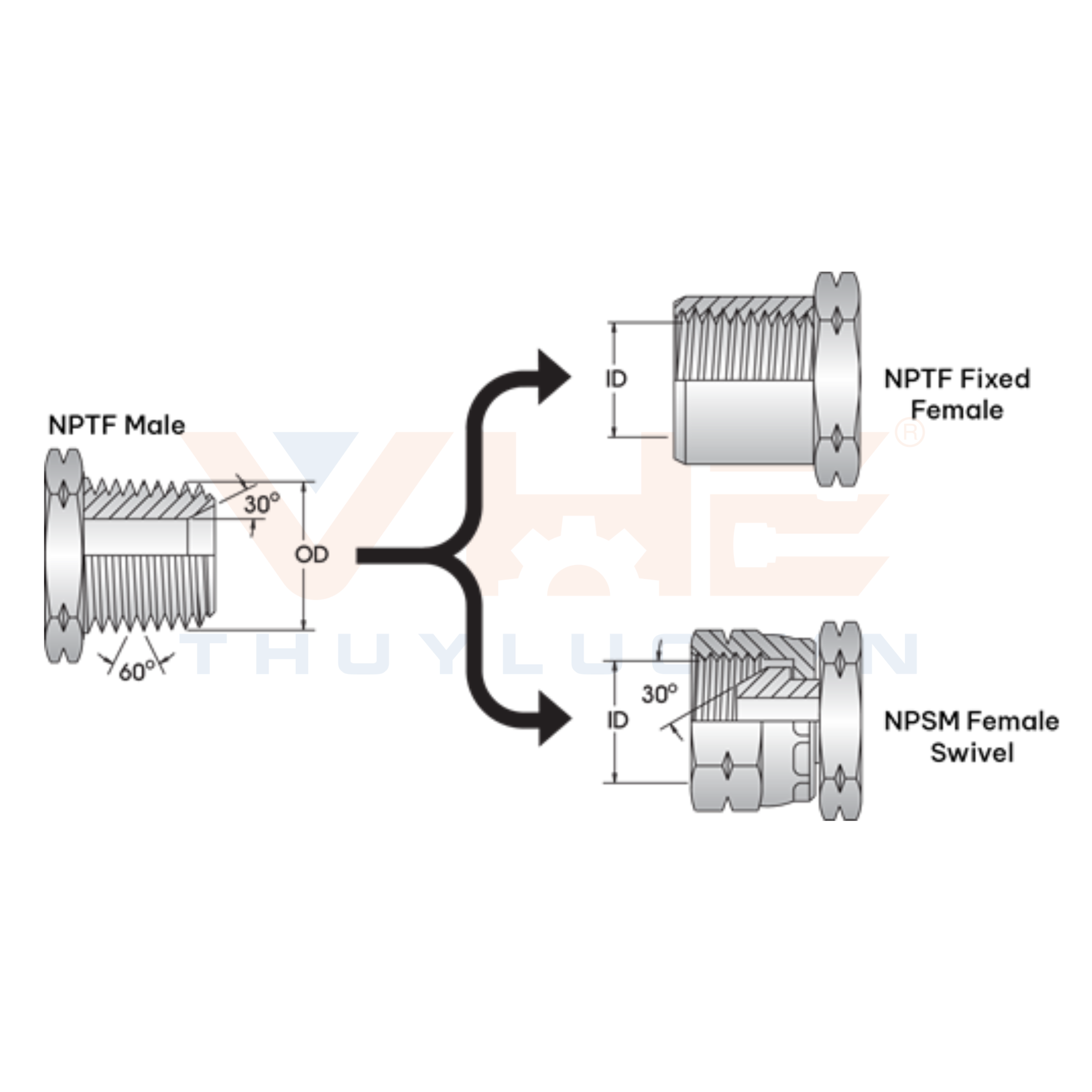
NPT (National Pipe Tapered) - American Standard

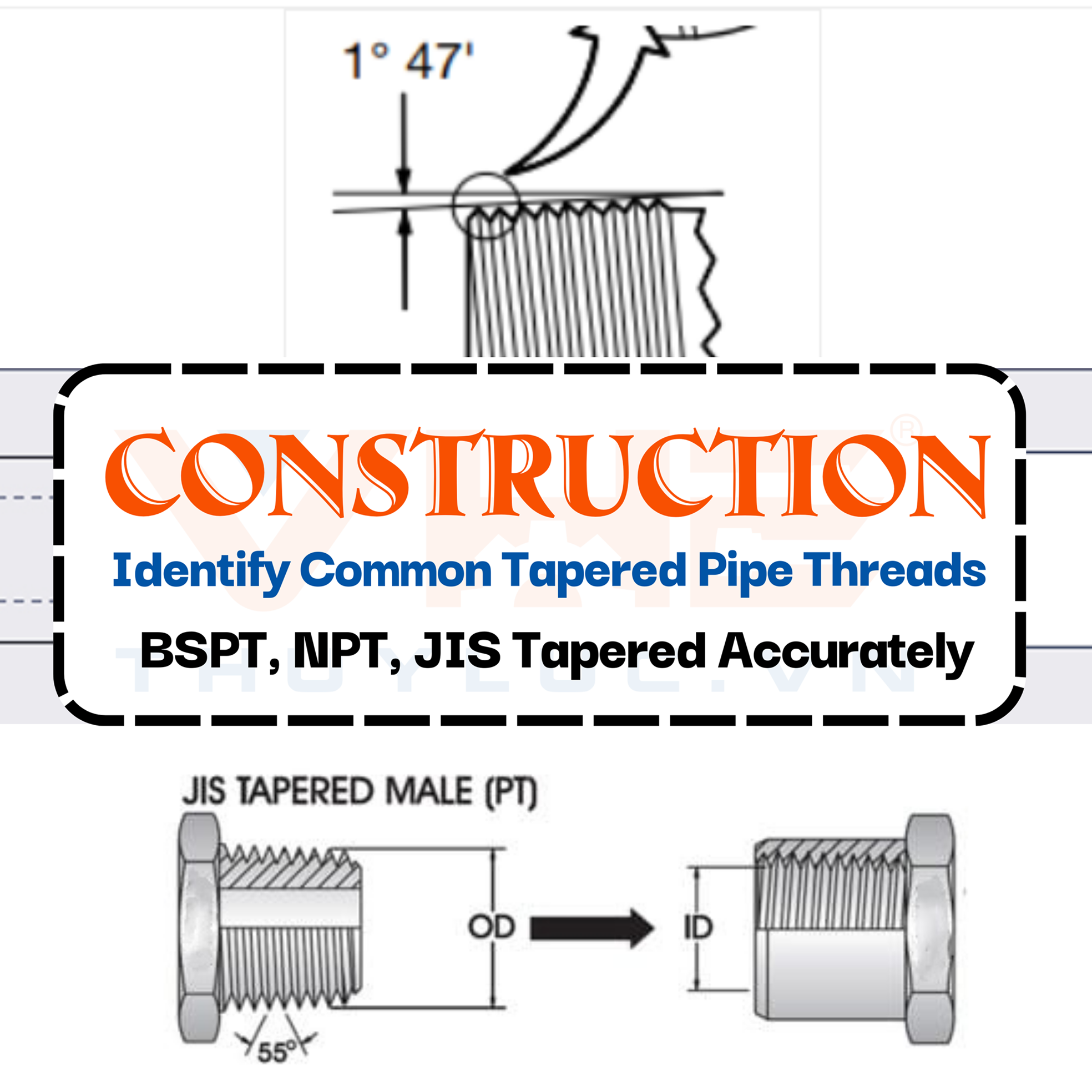
2.3. JIS Tapered (Japanese Industrial Standard) - Japanese Standard

This thread system is frequently found on Japanese heavy equipment, construction machinery, and cranes (e.g., Komatsu, Kobelco).

  • Characteristics: Fundamentally, JIS Tapered threads (often designated as PT or R) share the exact same dimensional specifications as BSPT threads.
  • Thread Angle: 55°.
  • Important Note: Although the thread dimensions match BSPT perfectly, in practical applications, JIS fittings are often paired with specific flange or flare configurations (like a 30° flare) that are unique to Japanese manufacturers.
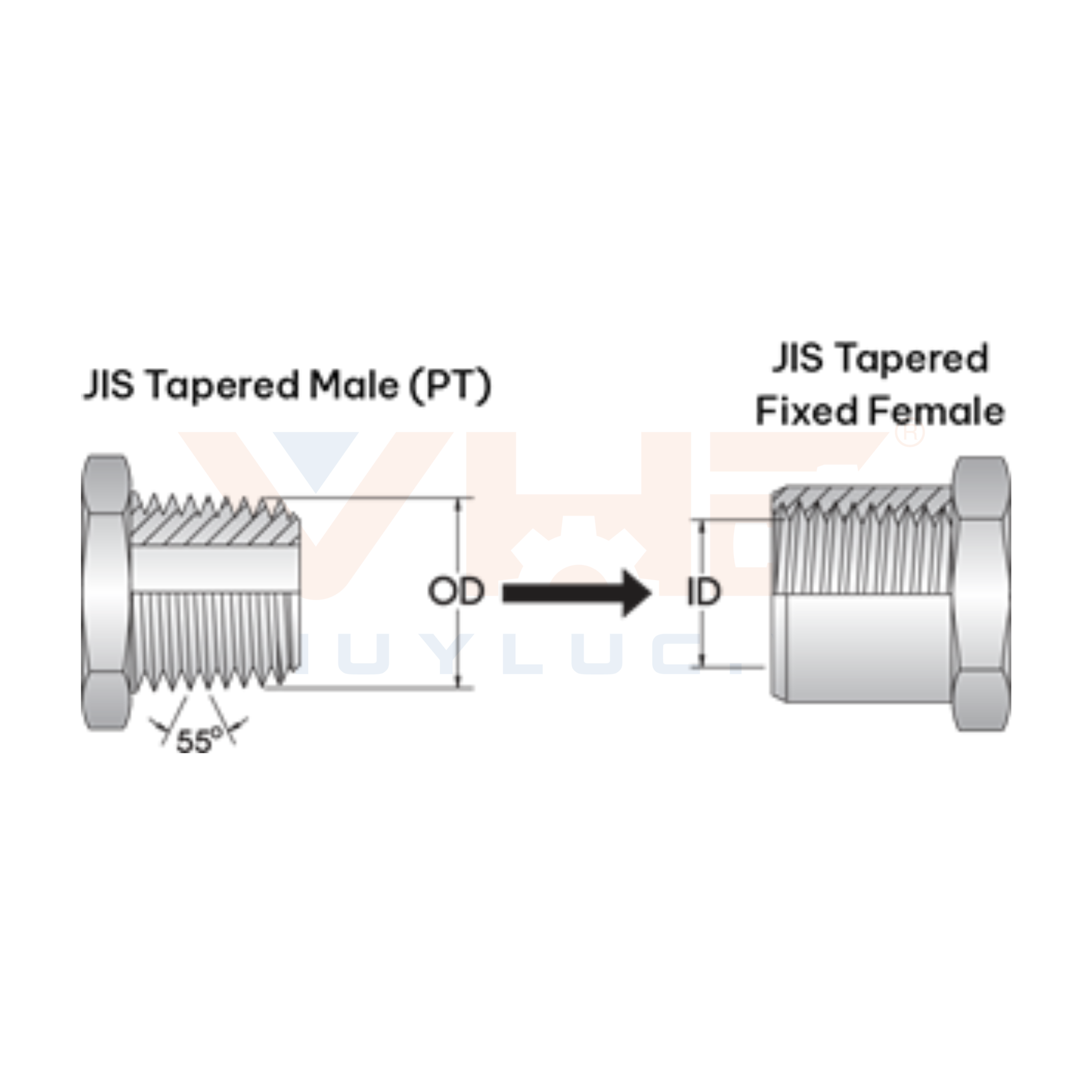
JIS Tapered (Japanese Industrial Standard) - Japanese Standard

3. A 3-Step Guide to Accurately Measuring and Identifying Thread Standards

To accurately determine the exact thread type you are working with, we highly recommend following this simple procedure:

Step 1: Verify the Taper Use a caliper to measure the outside diameter at both the beginning and the end of the threaded section. If the dimension gradually decreases toward the tip, you are definitively working with a tapered thread.

Step 2: Measure the Thread Pitch Use a thread pitch gauge to determine the exact number of Threads Per Inch (TPI).

Note: NPT and BSPT have different thread counts across various sizes. However, you must be careful: for a 1/2" size, both NPT and BSPT share the exact same pitch of 14 TPI. Because the TPI can sometimes be identical, you cannot rely on pitch alone, which brings us to the final step.

Step 3: Check the Thread Angle Use a specialized thread pitch gauge to verify the angle between the thread flanks. If the threads fit snugly into a 60° gauge, it is an NPT thread. If they perfectly match a 55° gauge, you are dealing with a BSPT or JIS Tapered thread.
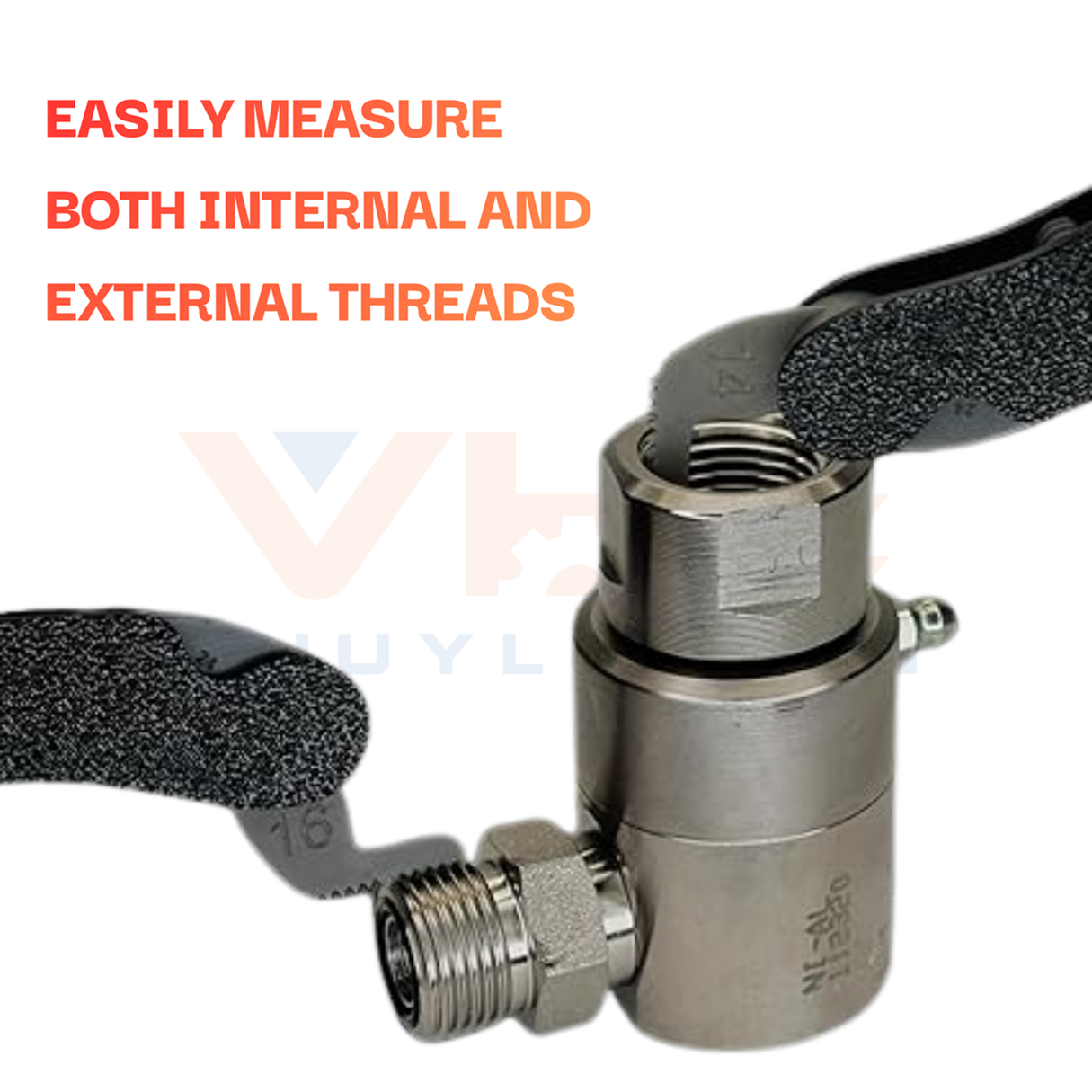
Thread Pitch

4. Quick comparison table of BSPT, NPT, and JIS Tapered threads.

Characteristic BSPT NPT JIS Tapered
Cone Angle 30° 30° None
Thread Angle 55° 60° 55° (similar BSPT)
Common symbols R, Rc, PT NPT PT, R
Standard England/Europe America Japan

5. Insights from Technical Experts & Real-World Case Studies

When replacing hydraulic fittings or hoses, never guess the thread type by eye. A microscopic mismatch between a 55° and 60° thread angle can lead to severe pressure leaks after just a few hours of operation.

At Vietnam Hydraulic Equipment Joint Stock Company (VHE), we strongly advise our clients to utilize a standard caliper and thread pitch gauge prior to any installation. Particularly for systems requiring high durability or operating in corrosive environments (such as the shipbuilding or chemical industries), selecting the correct fitting material is just as critical as identifying the proper thread standard.

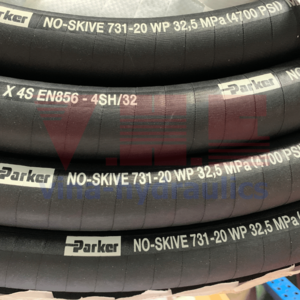
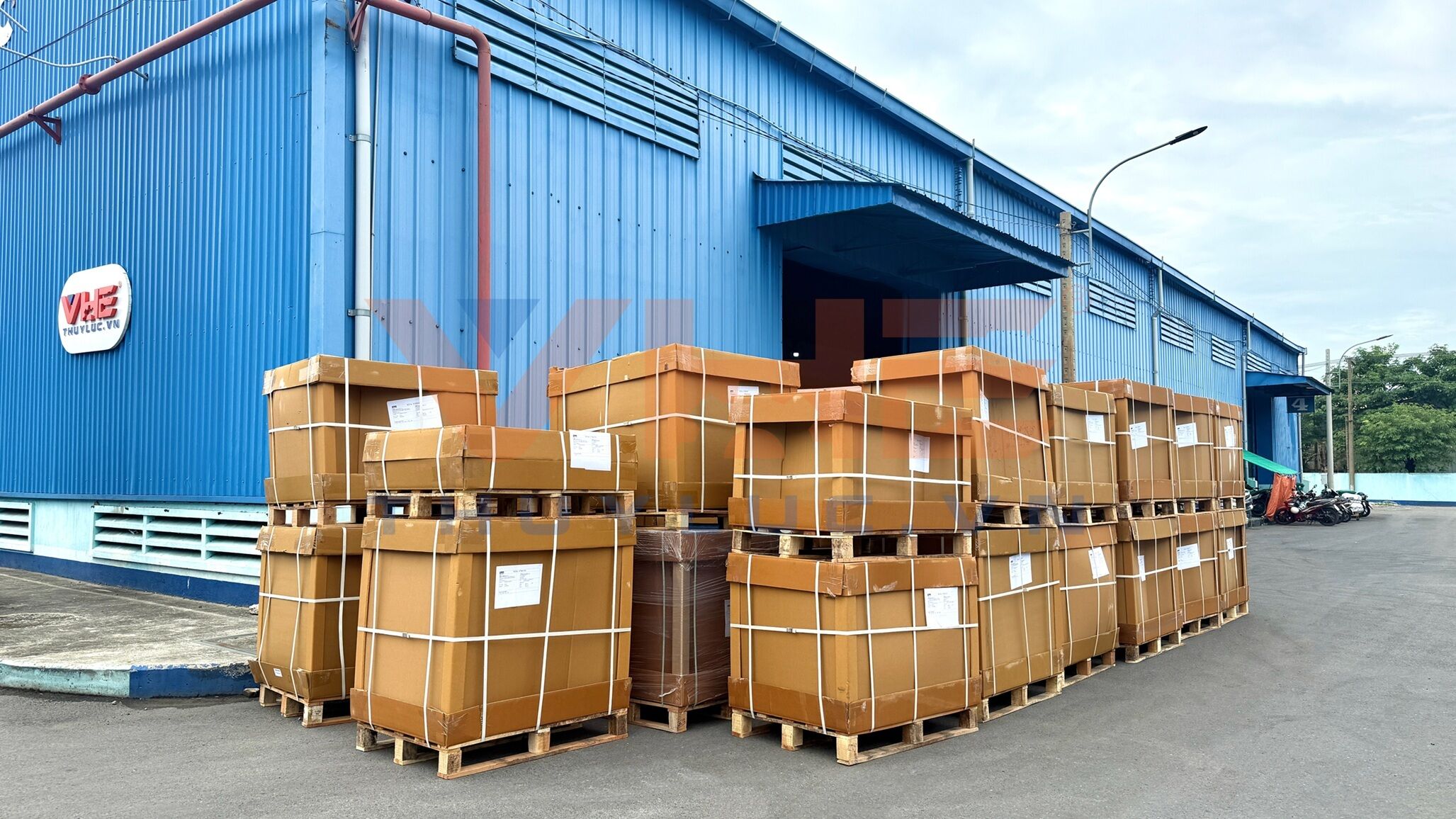
Inside the VHE Warehouse: Below is a newly arrived shipment of premium Stainless Steel fittings. These products not only guarantee absolute precision in thread pitch but also provide exceptional corrosion resistance, strictly meeting the most stringent technical requirements in the hydraulic industry.
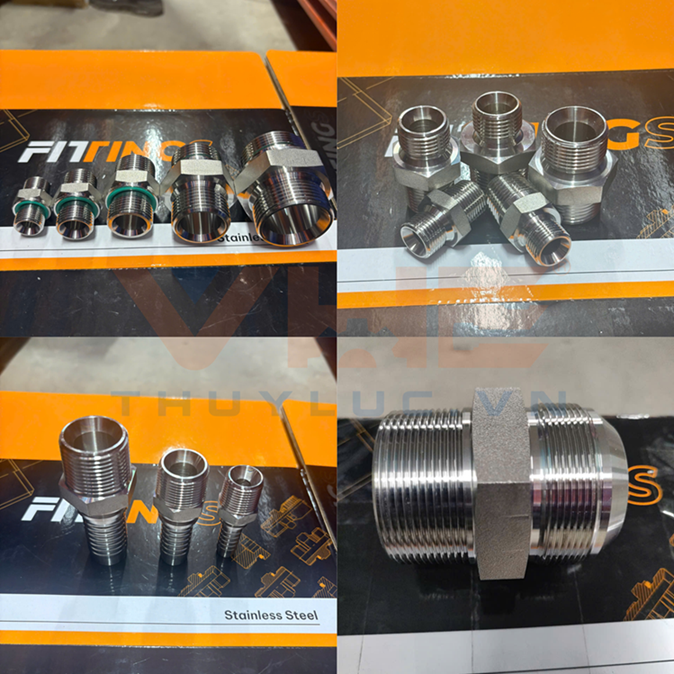
premium Stainless Steel fittings

If you are struggling to identify the correct thread system for your machinery, do not hesitate to reach out to the VHE technical team for accurate inspection and expert consultation!

- Consultation & Support: 0903 067 588

- Support Email: [email protected]
XEM THÊM CÁC CÂU HỎI KHÁC

5 Crucial Considerations Before Installing Seamless Hydraulic Pipes in the Factory

The installation of high-pressure hydraulic piping systems in industrial facilities (such as shipbuilding, petrochemical, and food processing plants) is by no means a simple task. Unlike flexible hoses, seamless pipes provide greater rigidity and superior pressure resistance, yet they demand absolute precision in measurement and assembly.

A single minor deviation in dimensions or a flaw in the connection method can

Xem tiếp ...

Guide to Distinguishing Common Flare Thread Systems (JIC, SAE, JIS, and JIS Komatsu)

Guide to Distinguishing Common Flare Thread Systems (JIC, SAE, JIS, and JIS Komatsu)

In hydraulic engineering, thread systems that utilize a flare surface for sealing are frequently confused due to their nearly identical external appearances. Incorrect installation does not only lead to leakages but can also cause catastrophic failure of the fittings due to mismatched flare angles and thread pitches. This article will guide you on how to easily measure inside and outside

Xem tiếp ...

Complete Range of DIN Fittings for Seamless Steel Tubes: A Fast and Weld-Free Assembly Solution

When installing fixed piping systems for factories or outdoor transmission lines, assembling rigid pipes is always a labor-intensive task. Traditional welding processes not only require highly skilled welders but also present numerous challenges and risks when performed in confined spaces, at heights, or outdoors under harsh weather conditions.

To thoroughly resolve this issue, using DIN seamless steel pipes combined with

Xem tiếp ...

Why Choose VHE Seamless Pipes for High-Pressure Industrial Projects?

In industrial hydraulic systems, seamless pipes act as the core power transmission network...
A minor discrepancy in specifications or a lack of synchronization in connections can lead to pressure leaks, causing total production downtime and massive operational losses.

Quality Commitment from VHE Specialized Seamless Pipes

At VHE, we deeply understand the rigorous standards required by plant engineers. Our hydraulic seamless

Xem tiếp ...

Precise and Fast Custom Seamless Steel Pipe Cutting Service at VHE for Industrial Plants

Seamless Steel Pipe Cutting and Machining

Challenges in Installing Seamless Steel Pipelines in Industrial Plants

In heavy industrial facilities, thermal power plants, and chemical factories, hydraulic piping and fixed fluid conveyance systems play a critical role in daily operations. Installing these systems requires a massive volume of highly durable, pressure-resistant materials, such as SS316 stainless steel pipes, standard seamless steel pipes, and galvanized steel pipes.

However,

Xem tiếp ...

Why is seamless tubing more essential for high-pressure hydraulic systems than welded tubing?

Why is seamless tubing more essential for high-pressure hydraulic systems than welded tubing?

1. Potential Risks in Extreme Environments

Imagine a ship’s hydraulic cylinder operating in the heart of a storm, or a petrochemical refinery platform functioning under thousands of PSI. Suddenly, a hydraulic line ruptures. The consequences extend far beyond costly operational downtime—amounting to billions of VND per hour—to the grave risks of marine environmental pollution and direct threats to human life.

Xem tiếp ...

Understanding Specs & Size Chart: DIN 2391 Seamless Steel & SS316 Stainless Tubing

Understanding Specs & Size Chart: DIN 2391 Seamless Steel & SS316 Stainless Tubing

Did you know: Over 70% of leakage and pressure drop issues in hydraulic systems stem from selecting the incorrect tube standards and dimensions? In high-pressure environments, even a minor deviation in wall thickness or outside diameter can lead to severe consequences.

So, how can you accurately read the technical specifications of DIN 2391 St37.4 (NBK Phosphated) seamless steel tubes and

Xem tiếp ...

Differentiating the 3 Common Seamless Hydraulic Tubes: Black Steel, Galvanized, and SS316

In high-pressure hydraulic systems, specifying the wrong type of seamless steel tube not only leads to a wasted budget but also poses extremely dangerous risks of leakage and catastrophic blowouts. Are you currently debating between black carbon steel, galvanized steel, or SS316 stainless steel tubes? Which one is the absolute optimal choice for your project? Let Vietnam Hydraulic Equipment (VHE)

Xem tiếp ...

4 Ways to Fix Fire Hose Leaks at the Coupling

Is your fire hose constantly leaking or spraying water at the coupling? This is more than just a minor waste—it is a significant safety hazard that drastically reduces water pressure when a fire breakout occurs. For facility managers and fire safety teams, resolving these leaks is a top priority to ensure emergency readiness.

In this article, we provide a technical

Xem tiếp ...

2026's Top 4 Marine Stainless Steel Hydraulic Connectors

In the marine environment, the greatest risk to any hydraulic system is not just pressure, it is galvanic corrosion. A leaking fitting does more than just cause oil loss; it can paralyze critical systems, from steering gear to cargo cranes

Are you searching for a durable connection solution that is durable enough to withstand salt spray and high-impact pressure? That

Xem tiếp ...

HỖ TRỢ TƯ VẤN MIỄN PHÍ

Nếu không tìm được thông tin cần thiết, vui lòng liên hệ với chúng tôi để được tư vấn miễn phí

Hotline tư vấn

(028) 3503 0349

0903 967 588 - 0903 067 588

[email protected]

hoặc để lại thông tin thông qua công cụ
TƯ VẤN HỖ TRỢ ngay bên dưới, chúng tôi sẽ phản hồi ngay khi nhận được thông tin