Inox 201 là gì?

Inox 201 là loại thép không gỉ chi phí thấp thay thế cho inox 304

Inox 201 hay còn gọi là thép không gỉ 201 (tiếng anh 201 stainless steel). Là mác thép thuộc nhóm Austentic, có thành phần chủ yếu là crom, niken và mangan. Nó được phát triển vào những năm 1950 do thiếu niken trên toàn thế giới.

Inox 201 là một giải pháp chi phí thấp hơn thay thế cho các thép không gỉ Cr-Ni như inox 301 và inox 304. Niken được thay thế bằng việc bổ sung Mangan và Nito. Inox 201 về cơ bản không có từ tính trong điều kiện ủ và trở thành từ tính khi được làm lạnh.

Thành phần hóa học của inox 201 được thể hiện trong bảng dưới đây:
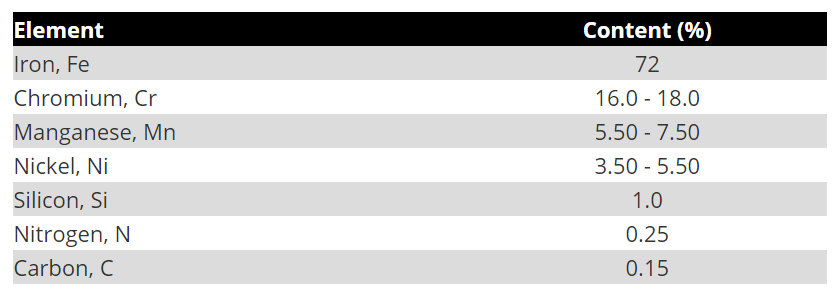
Bảng Thành phần hóa học của inox 201

Phương pháp sản xuất

Nhiệt độ ủ cho inox 201 là từ 1850-2000 ° F. Làm mát nhanh chóng qua dải kết tủa cacbua (1500 - 800o F) là cần thiết để giữ cacbua trong dung dịch và ngăn ngừa sự nhạy cảm. Thép không gỉ 201 không cứng bằng cách xử lý nhiệt, nó chỉ cứng bằng cách làm lạnh.

Kỹ thuật hàn

Thép không gỉ 201 có thể được hàn bằng tất cả các phương pháp thông. Giống như các loại thép không gỉ austenit khác mà cacbon không được kiểm soát dưới 0,03%, loại inox 201 dễ bị ăn mòn giữa các hạt trong vùng chịu nhiệt hàn.
Khẳ năng chịu nhiệt

Inox 201 có khả năng chịu được nhiệt độ trong khoảng 1149-1232°C (2100-2250°F).

Khả năng chịu ăn mòn

Inox 201 có khả năng chịu được nhiều môi trường ăn mòn từ nhẹ đến trung bình. Nó có khả năng chống ăn mòn gần giống với inox 301 và đã được thay thế thành công cho inox 304 trong nhiều môi trường nhẹ.

Các dạng thành phẩm

Hiện nay inox 201 sử dụng khá phổ biến trong đời sống và được sản xuất dưới các dạng như: Cuộn, tấm, ống, hộp, thanh la, thanh v, cây đặc và các loại phụ kiện

Ứng dụng của inox 201 trong đời sống

Thép không gỉ 201 được sử dụng phổ biến trong đời sống hàng ngày, từ dân dụng tới công nghiệp. Một số ứng dụng cụ thể như làm giường, tủ, bàn ghế, máy giặt, cửa sổ, cầu thang, lan can, thiết bị gia dụng, nhà bếp và thiết bị đựng thực phẩm, bồn rửa, dụng cụ nấu nướng, xe lửa đường sắt, rơ moóc máy kéo và ô tô…
XEM THÊM CÁC CÂU HỎI KHÁC

Aluminum vs. Plastic Pipe Clamps - Which is the Optimal Choice for the Marine Industry?

The marine and shipbuilding industries have always demanded rigorous international technical standards. On marine vessels and floating docks, hydraulic piping systems must withstand extremely harsh environments: continuous exposure to corrosive salt vapour, extreme temperature fluctuations, and severe vibrations from the engines. To secure these pipelines, DIN 3015 standard pipe clamps are essential. Currently, the two most popular materials for clamp

Xem tiếp ...

Stackable Clamps: The Space-Saving Solution for Complex Hydraulic Systems

In industrial plants, routing multiple seamless steel tubes (such as DIN 2391 or ASTM A213) for high-pressure fluid transmission consistently presents a significant challenge. Confined spaces often lead to cluttered layouts, increasing the inherent risk of connection fractures caused by continuous vibration. 

Stackable Clamps: The Space-Saving Solution for Complex Hydraulic Systems

To thoroughly address this issue, Heavy Series Stackable Clamps serve as the ultimate fastening solution, ensuring stable system

Xem tiếp ...

Construction to choose and install Light Series Pipe Clamps for tight spaces

Construction to choose and install Light Series Pipe Clamps for tight spaces

When installing a fixed piping system in manufacturing plants or outdoor hydraulic stations, installation space is often limited. Confined spaces and areas close to walls demand compact fastening solutions without compromising on load-bearing capacity. The optimal solution for these applications is the use of light series single hydraulic pipe clamps.

The article below will provide detailed technical specifications from the

Xem tiếp ...

Distinguishing between Heavy series and Light series Hydraulic pipe clamps

During the installation and maintenance of the hydraulic and pneumatic piping systems within industrial plants, selecting the correct pipe clamps is a decisive factor in minimizing vibration and ensuring structural support. Under the international DIN 3015 standard, pipe clamps are primarily categorized into two main lineups: the Light Series and the Heavy Series.

Therefore, what exactly sets these two series

Xem tiếp ...

What Are DIN 3015 Hydraulic Pipe Clamps? Why Are They Essential for Marine Factories?

What Are DIN 3015 Hydraulic Pipe Clamps? Why Are They Essential for Marine Factories?

1. The Hidden Risks of Pipeline Vibration Failures

In hydraulic systems within heavy industrial plants, oil rigs (Oil & Gas), or marine vessels (Marine), continuous fluctuations in pressure and flow rates generate extreme vibrations.
If only temporary or technically incorrect pipe fastening methods are used, the system will face severe consequences:

  • Cracking and bursting of oil pipelines.
  • Fluid leakage at
Xem tiếp ...

Common Flange Standards for Stainless Steel Flexible Metal Hoses

In industrial piping systems, stainless steel flexible joints play a core role in absorbing vibrations, compensating for thermal expansion, and protecting critical equipment. However, to ensure precise installation and safe operation, selecting the correct flange connection standard is vital. This article provides a comprehensive overview of the common flange standards currently used in the fabrication and welding of flexible joints.

Xem tiếp ...

How Does the Stainless Steel Braided Mesh Affect the Working Pressure of Metal Hoses?

In industrial piping system design, the corrugated metal hose is a core material for expansion compensation and vibration isolation. However, the corrugated core itself (U-Type, O-Type, or Spiral-Type) has a relatively thin wall, primarily responsible for providing flexibility and conveying media.

So, how can this pipeline withstand pressures up to hundreds of bars without deforming or bursting? The answer lies

Xem tiếp ...

Applications of Stainless Steel Flexible Hoses in Extreme Environments

In industrial piping system design, managing vibrations and installation misalignments under normal conditions is challenging enough; however, maintaining stability in the harshest environments presents an even more formidable challenge.

1. The Lifeline Piping Systems in Mega-Plants

Imagine a pipeline network transporting chemicals, thermal oil, or liquefied gases within power generation facilities or petrochemical refineries. This serves as the critical core

Xem tiếp ...

HỖ TRỢ TƯ VẤN MIỄN PHÍ

Nếu không tìm được thông tin cần thiết, vui lòng liên hệ với chúng tôi để được tư vấn miễn phí

Hotline tư vấn

(028) 3503 0349

0903 967 588 - 0903 067 588

[email protected]

hoặc để lại thông tin thông qua công cụ
TƯ VẤN HỖ TRỢ ngay bên dưới, chúng tôi sẽ phản hồi ngay khi nhận được thông tin