What Are Quick Couplings and How to Choose the Right One?

A Quick Coupling (also widely known as a Quick Disconnect) is a mechanical fitting engineered for the rapid and effortless connection or separation of fluid and gas lines. These components allow operators to join or part lines by hand, eliminating the need for tools (such as wrenches) while effectively preventing fluid loss or leakage.

Join VHE in this article to explore the core nature of quick couplings and the critical technical criteria for selecting the ideal components for your system.
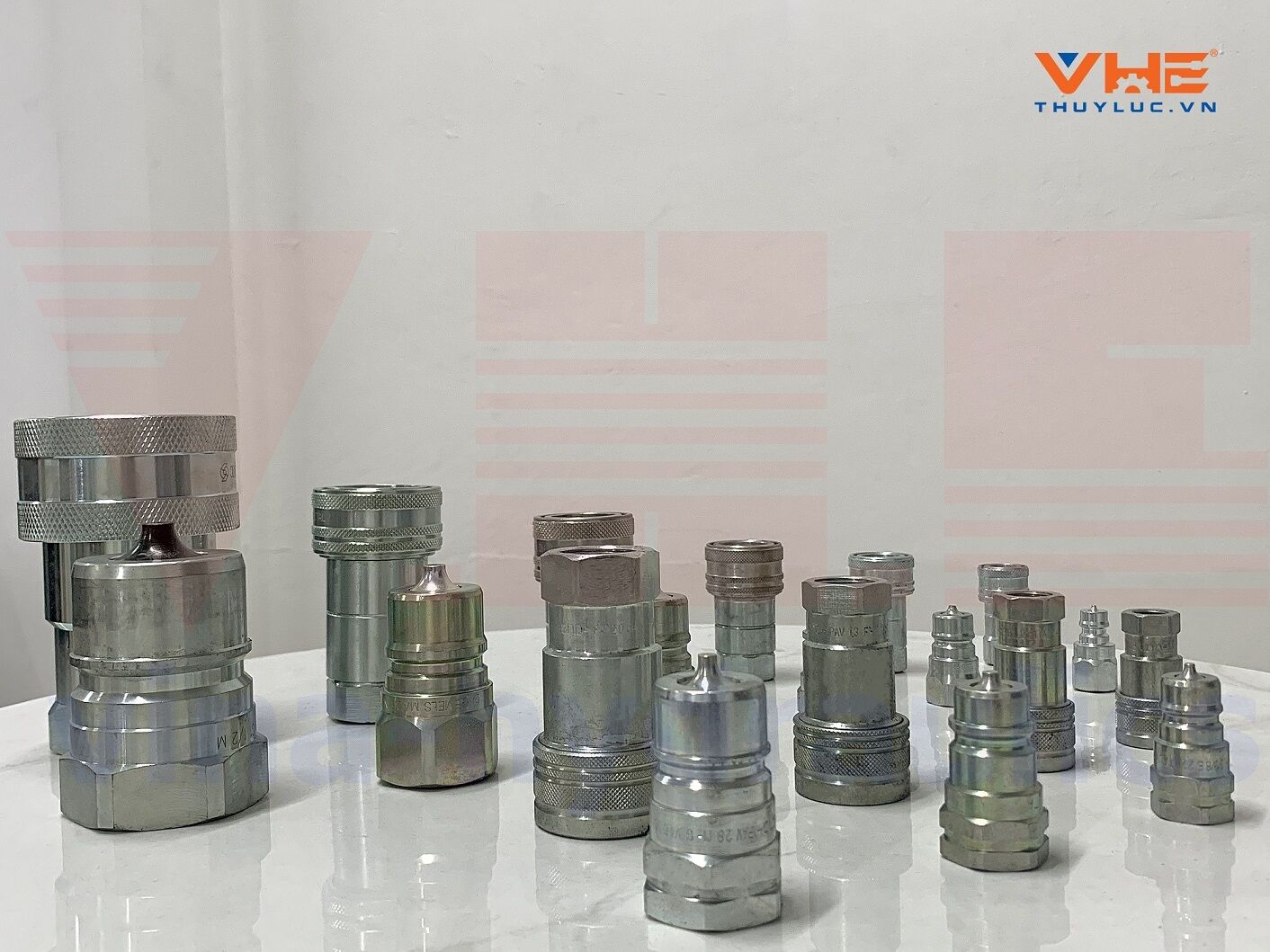
What Are Quick Couplings and How to Choose the Right One?

1. What are Quick Couplings?

A Quick Coupling (also widely known as a Quick Disconnect) is a mechanical fitting engineered for the rapid and effortless connection or separation of fluid and gas lines. These components allow operators to join or part lines by hand, eliminating the need for tools (such as wrenches) while effectively preventing fluid loss or leakage.

A standard quick coupling assembly consists of two primary components:

+ Male Part (Plug/Nipple): The insertion end of the assembly.

+ Female Part (Socket/Coupler): The receiving end, which typically houses the locking mechanism (such as steel balls or threaded sleeves) to secure the connection.

2. Why Should You Use Quick Couplings?

- Time Efficiency: Connecting and disconnecting lines takes only a matter of seconds, compared to the minutes required for traditional threaded joints. This significantly reduces downtime and boosts overall operational productivity.

- Leakage Prevention: Most modern quick couplings feature integrated automatic shut-off valves that close instantly upon disconnection. This mechanism retains fluid within the lines, preventing waste, protecting the environment, and saving costs on fluid replacement.

- Enhanced Safety: They are engineered to minimize the risk of accidents and injuries caused by high-pressure fluid bursts or "hose whip" during manual assembly and disassembly.

3. A Comprehensive Guide to Selecting the Right Quick Coupling

To ensure durability and optimal performance, you should evaluate your selection based on these 5 essential technical criteria:

Size

The coupling size must be compatible with the required flow rate. Selecting a coupling that is too small will result in a significant pressure drop, leading to system overheating and decreased efficiency. On the other hand, an oversized coupling will lead to unnecessary costs and take up valuable installation space.

Temperature

Operating temperatures directly affect the integrity and lifespan of the internal O-rings (seals).

+ NBR (Buna-N) Seals: Suitable for standard applications with temperatures ranging from -20°C to 100°C.

+ Viton (FKM) Seals: Offer superior thermal resistance (up to 200°C) and high compatibility with harsh chemicals.

Application

- Analyze your specific working environment by asking the following questions:

- Does the system experience high levels of vibration?

- Do you need to connect or disconnect the lines while they are under residual pressure?

- Is the environment highly corrosive (e.g., offshore/seawater or chemical processing plants)?

Material Construction

- Carbon Steel: A cost-effective, high-strength option widely used in high-pressure hydraulic systems.

- Brass: Provides excellent corrosion resistance; typically used for pneumatic (air) or water lines.

- Stainless Steel (304 or 316): The premium choice for food-grade applications, chemical handling, and extreme environments.

Pressure

- Working Pressure: The maximum pressure the coupling can withstand continuously during operation.

- Burst Pressure: The threshold at which the coupling will structurally fail.

- Safety Note: For maximum safety, the Working Pressure is generally rated at 1/4 of the Burst Pressure (a 4:1 safety factor).

4. Where to Source High-Quality Quick Couplings?

Selecting the wrong quick coupling is more than just a financial waste; it poses significant risks, including system failure, leaks, and potential safety hazards. Vina-Hydraulic Equipment Joint Stock Company (VHE) is proud to be a leading provider of premium, genuine quick couplings that comply with the most stringent international standards.

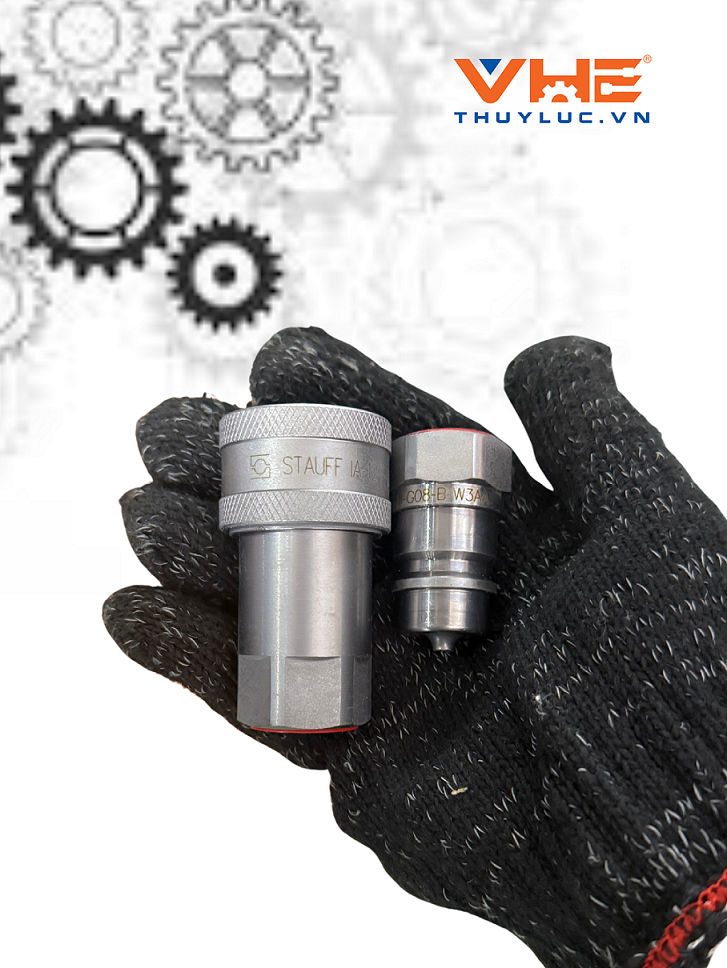
Recently, VHE successfully supplied over 300 sets of Stauff Quick Couplings to a major petrochemical and chemical processing plant.

Stauff Quick Coupling

Technical Specifications (Stauff Series):

- Material: Carbon Steel (Zinc-Nickel plated) or Stainless Steel.

- Cone Angle: 24° (ISO 8434-1).

- Valve Type: Flat Face (Non-spill design).

- Origin: Made in Germany.
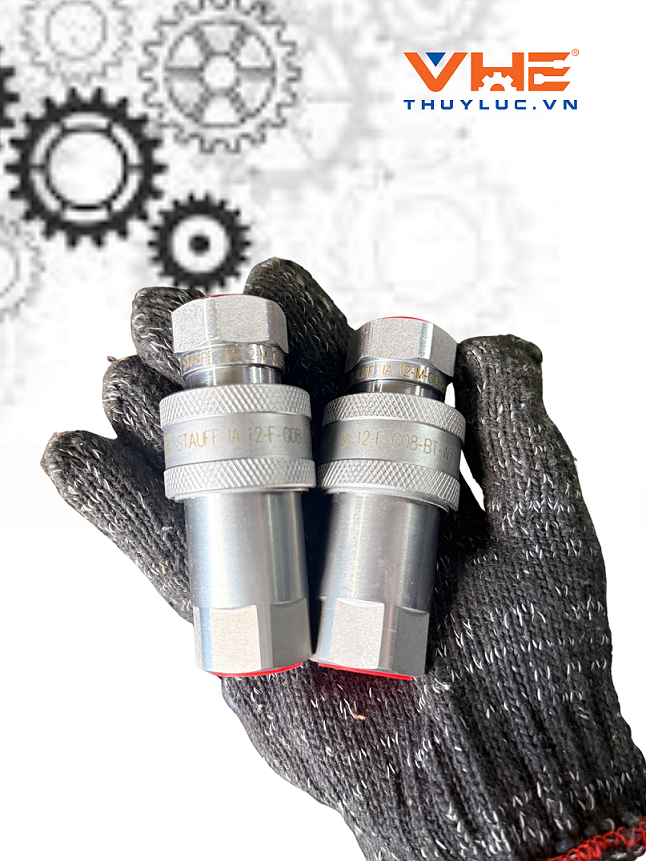
High-quality quick coupling

High-quality quick coupling in HCM City

High-quality quick coupling at a good price

For customers looking for high-performance Stauff quick couplings or seeking professional technical advice, please contact VHE:

- Technical Support & Inquiries: 0903 967 588 - 0903 067 588

- Email: [email protected]

- Head Office: 31 D20 Street, Phuoc Long Ward, Ho Chi Minh City, Vietnam.

- HCMC Warehouse: Street No. 10, Song Than Industrial Park, Di An Ward, Ho Chi Minh City, Vietnam.

- Hanoi Warehouse: Km28, Highway 6A, Dong De Industrial Park, Phu Nghia, Hanoi, Vietnam.
XEM THÊM CÁC CÂU HỎI KHÁC

Applications of Stainless Steel Flexible Hoses in Extreme Environments

In industrial piping system design, managing vibrations and installation misalignments under normal conditions is challenging enough; however, maintaining stability in the harshest environments presents an even more formidable challenge.

1. The Lifeline Piping Systems in Mega-Plants

Imagine a pipeline network transporting chemicals, thermal oil, or liquefied gases within power generation facilities or petrochemical refineries. This serves as the critical core

Xem tiếp ...

What is Flexible Metal Hose? Construction Overview and Manufacturing Standards

In industrial piping systems, vibrations, thermal expansion, and assembly misalignments are inevitable. To resolve these issues, stainless steel flexible metal hoses (also known as stainless steel braided metal hoses) are a crucial component. So, what exactly is the construction of this product, and what practical benefits does it offer to manufacturing plants? Let’s explore the details with VHE in the

Xem tiếp ...

5 Crucial Considerations Before Installing Seamless Hydraulic Pipes in the Factory

The installation of high-pressure hydraulic piping systems in industrial facilities (such as shipbuilding, petrochemical, and food processing plants) is by no means a simple task. Unlike flexible hoses, seamless pipes provide greater rigidity and superior pressure resistance, yet they demand absolute precision in measurement and assembly.

A single minor deviation in dimensions or a flaw in the connection method can

Xem tiếp ...

Guide to Distinguishing Common Flare Thread Systems (JIC, SAE, JIS, and JIS Komatsu)

Guide to Distinguishing Common Flare Thread Systems (JIC, SAE, JIS, and JIS Komatsu)

In hydraulic engineering, thread systems that utilize a flare surface for sealing are frequently confused due to their nearly identical external appearances. Incorrect installation does not only lead to leakages but can also cause catastrophic failure of the fittings due to mismatched flare angles and thread pitches. This article will guide you on how to easily measure inside and outside

Xem tiếp ...

Complete Range of DIN Fittings for Seamless Steel Tubes: A Fast and Weld-Free Assembly Solution

When installing fixed piping systems for factories or outdoor transmission lines, assembling rigid pipes is always a labor-intensive task. Traditional welding processes not only require highly skilled welders but also present numerous challenges and risks when performed in confined spaces, at heights, or outdoors under harsh weather conditions.

To thoroughly resolve this issue, using DIN seamless steel pipes combined with

Xem tiếp ...

Why Choose VHE Seamless Pipes for High-Pressure Industrial Projects?

In industrial hydraulic systems, seamless pipes act as the core power transmission network...
A minor discrepancy in specifications or a lack of synchronization in connections can lead to pressure leaks, causing total production downtime and massive operational losses.

Quality Commitment from VHE Specialized Seamless Pipes

At VHE, we deeply understand the rigorous standards required by plant engineers. Our hydraulic seamless

Xem tiếp ...

Precise and Fast Custom Seamless Steel Pipe Cutting Service at VHE for Industrial Plants

Seamless Steel Pipe Cutting and Machining

Challenges in Installing Seamless Steel Pipelines in Industrial Plants

In heavy industrial facilities, thermal power plants, and chemical factories, hydraulic piping and fixed fluid conveyance systems play a critical role in daily operations. Installing these systems requires a massive volume of highly durable, pressure-resistant materials, such as SS316 stainless steel pipes, standard seamless steel pipes, and galvanized steel pipes.

However,

Xem tiếp ...

Why is seamless tubing more essential for high-pressure hydraulic systems than welded tubing?

Why is seamless tubing more essential for high-pressure hydraulic systems than welded tubing?

1. Potential Risks in Extreme Environments

Imagine a ship’s hydraulic cylinder operating in the heart of a storm, or a petrochemical refinery platform functioning under thousands of PSI. Suddenly, a hydraulic line ruptures. The consequences extend far beyond costly operational downtime—amounting to billions of VND per hour—to the grave risks of marine environmental pollution and direct threats to human life.

Xem tiếp ...

Understanding Specs & Size Chart: DIN 2391 Seamless Steel & SS316 Stainless Tubing

Understanding Specs & Size Chart: DIN 2391 Seamless Steel & SS316 Stainless Tubing

Did you know: Over 70% of leakage and pressure drop issues in hydraulic systems stem from selecting the incorrect tube standards and dimensions? In high-pressure environments, even a minor deviation in wall thickness or outside diameter can lead to severe consequences.

So, how can you accurately read the technical specifications of DIN 2391 St37.4 (NBK Phosphated) seamless steel tubes and

Xem tiếp ...

Differentiating the 3 Common Seamless Hydraulic Tubes: Black Steel, Galvanized, and SS316

In high-pressure hydraulic systems, specifying the wrong type of seamless steel tube not only leads to a wasted budget but also poses extremely dangerous risks of leakage and catastrophic blowouts. Are you currently debating between black carbon steel, galvanized steel, or SS316 stainless steel tubes? Which one is the absolute optimal choice for your project? Let Vietnam Hydraulic Equipment (VHE)

Xem tiếp ...

HỖ TRỢ TƯ VẤN MIỄN PHÍ

Nếu không tìm được thông tin cần thiết, vui lòng liên hệ với chúng tôi để được tư vấn miễn phí

Hotline tư vấn

(028) 3503 0349

0903 967 588 - 0903 067 588

[email protected]

hoặc để lại thông tin thông qua công cụ
TƯ VẤN HỖ TRỢ ngay bên dưới, chúng tôi sẽ phản hồi ngay khi nhận được thông tin

Sản phẩm