The installation of high-pressure hydraulic piping systems in industrial facilities (such as shipbuilding, petrochemical, and food processing plants) is by no means a simple task. Unlike flexible hoses, seamless pipes provide greater rigidity and superior pressure resistance, yet they demand absolute precision in measurement and assembly.
A single minor deviation in dimensions or a flaw in the connection method can result in fluid leaks, pressure drops, or even a complete system shutdown. To ensure a seamless execution, engineers and contractors must absolutely not overlook the 5 crucial considerations below.
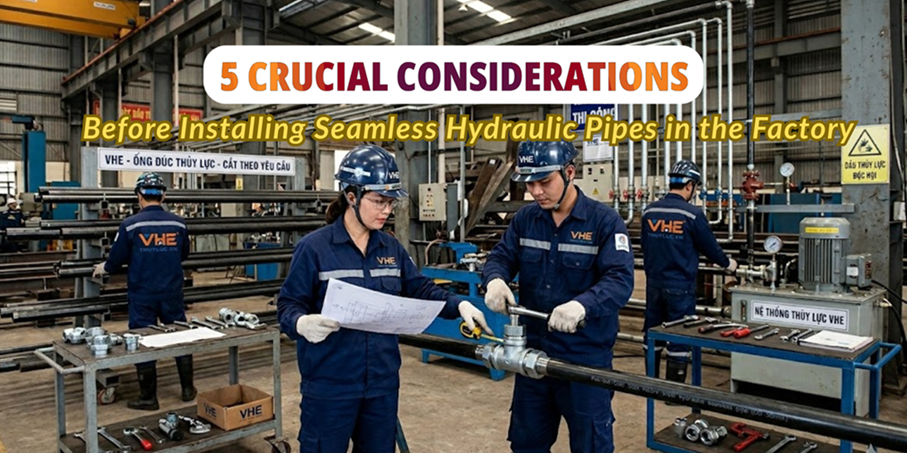
1. On-site Survey and Absolutely Precise Length Measurement
Unlike flexible hoses that can be bent easily, seamless hydraulic piping is inherently rigid. Therefore, determining the exact distances between pump stations, valves, and connection points is the most critical step.
Instead of bringing raw pipes to the site for manual cutting—which is time-consuming, prone to dimensional errors, and often lacks specialized machinery for proper edge preparation—the optimal solution is to send detailed drawings or dimensions directly to your supplier. VHE currently offers highly accurate, cut-to-length seamless steel pipe services with on-site delivery, helping your execution team drastically reduce the time spent on raw material processing.
2. Selecting the Right Seamless Pipe Material for Your Plant's Environment
Using the wrong material not only reduces the piping system's lifespan but also poses significant safety hazards. Base your material checklist on the actual working conditions of your facility:
-
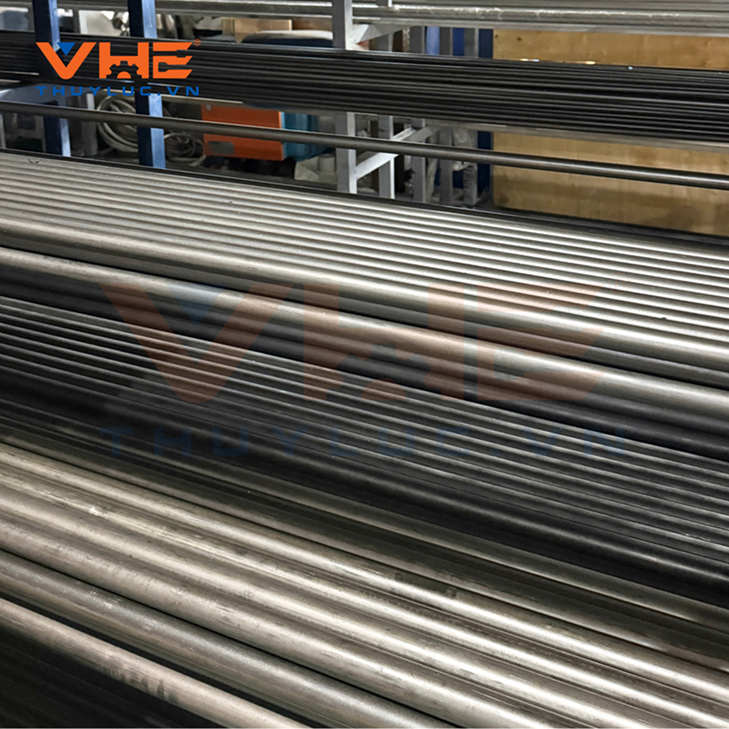
Chemical, Food Processing, and Marine Environments: It is mandatory to use SS316 stainless steel seamless pipes to maximize corrosion resistance. (Differentiating the 3 Common Seamless Hydraulic Tubes: Black Steel, Galvanized, and SS316)
- Standard Workshops and General Hydraulic Oil Systems: Opt for DIN 2391 standard carbon steel (black steel) seamless pipes to optimize costs.
- High Humidity and Mild Rust-Prone Environments: Prioritize galvanized seamless pipes.
3. Prioritizing Fitting-Based Assembly Over Pipe Bending or Welding
Many installation teams still rely on the traditional habits of welding or attempting to bend rigid tubes. However, on-site bending requires bulky machinery, highly skilled technicians, and carries a high risk of denting or compromising the tube's pressure-holding capacity. Meanwhile, welding poses the hidden danger of weld slag falling into the system, which can clog valves and ruin pumps.
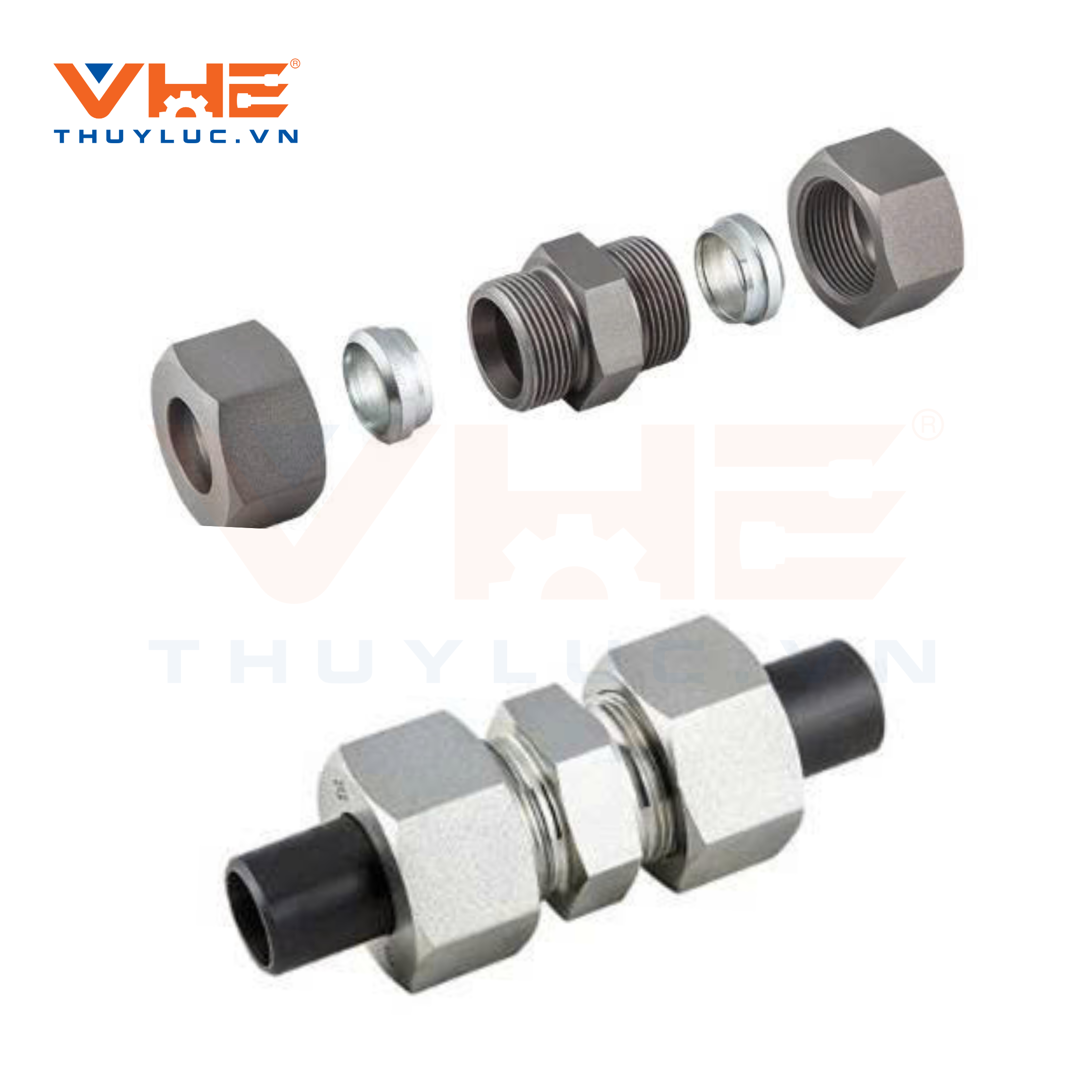
The most modern and secure solution today is utilizing DIN-standard seamless pipes paired with DIN-standard hydraulic fittings. By combining precisely pre-cut pipe sections with a system of connectors, elbows, and tees using bite-type cutting rings (ferrules), you can assemble the entire system rapidly. This method withstands extremely high pressures without the need for welding torches or complex bending machines.
4. Thoroughly Cleaning and Flushing Pipes Before Assembly
After the cutting process, metal shavings and dust can easily adhere to the inner walls of the pipe. If not thoroughly removed, these contaminants will flow directly into the hydraulic oil system, potentially scoring cylinders or jamming directional control valves.
Note: Always use compressed air to blow out the system or employ specialized flushing solutions to completely clean the pipe interior and the cut edges before you proceed to tighten the fittings.
5. Preparing a Contingency Material List (5-10% Surplus)
Real-world on-site installations inevitably encounter unexpected adjustments, such as needing to route around a newly discovered obstacle or shifting the location of the hydraulic power unit. A shortage of just a meter or two of piping or a few connectors can force the entire installation team to sit idle while waiting for supplemental materials. Always plan for a 5-10% surplus of seamless tubes and DIN connection fittings to guarantee that your project timeline remains uninterrupted.
CONCLUSION
Thorough preparation—from measurement and material selection to the installation method—dictates the ultimate durability of the entire hydraulic system. By eliminating complex welding and bending processes and leveraging pre-cut machining services, contractors can drastically accelerate project schedules and optimize labor costs.
Are you sourcing piping materials for an upcoming project? At VHE, we provide a comprehensive range of seamless hydraulic pipes (Carbon Steel, Galvanized, and SS316 Stainless Steel) alongside a complete lineup of DIN-standard hydraulic fittings. We offer custom cut-to-length services matching your exact specifications, with direct delivery to your factory.
Reach out to VHE today via Hotline/Zalo or send your Bill of Materials (BOM) via email to receive a detailed project quotation with the most competitive discount rates. (Please note: Due to technical specificities and market fluctuations, material prices are not publicly listed on our website).
Contact Information:
- Consulting & Support: 0903 067 588
- Email: [email protected]
- Office Address: 31 D20 Street, Phuoc Long Ward, Ho Chi Minh City, Vietnam.
- HCM Warehouse: Street No. 10, Song Than Industrial Zone, Di An Ward, Ho Chi Minh City, Vietnam.
- HN Warehouse: Km28, National Route 6A, Dong De Industrial Cluster, Phu Nghia Commune, Hanoi City, Vietnam.